wellness
Walking Meditation: How to Turn Your Daily Walk into Mindfulness
Amsterdam's streets and canal paths offer some of Europe's best conditions for meditative walking, and practitioners say you don't need a cushion or a studio to start.
Listen in English · 4 min
How we reported this
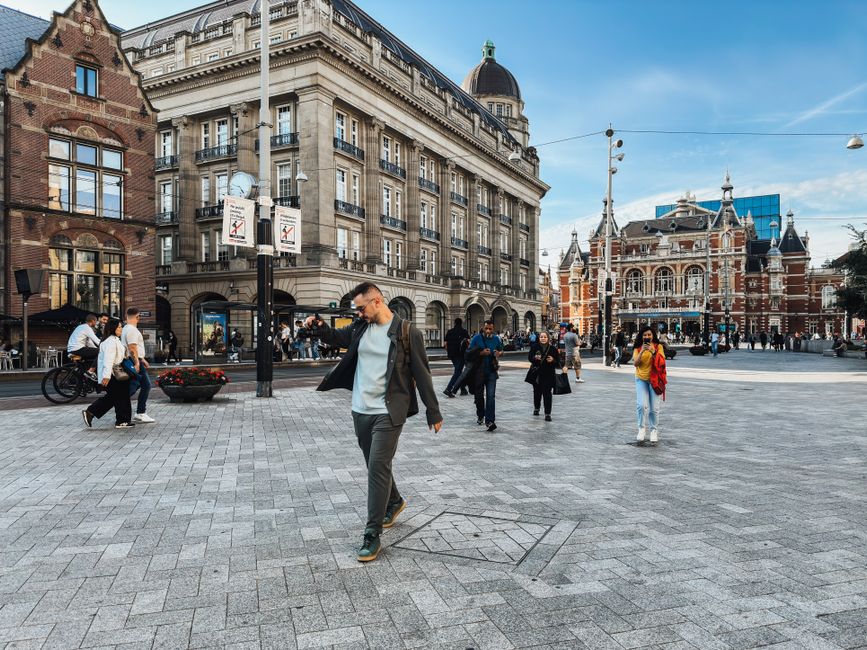
Most Amsterdammers already walk more than they realise. The average resident covers roughly 4,800 steps per day just moving between trams, bikes and errands, according to data published by the RIVM in 2025. The question a growing number of wellness practitioners are now asking is simple: what if those steps actually counted for your mental health?
Walking meditation, a practice rooted in Buddhist tradition but increasingly stripped of any religious framing, turns an ordinary commute or afternoon loop into something closer to a structured mindfulness session. The technique is straightforward: slow your pace, fix attention on the physical sensation of each footfall, notice breath, sound and peripheral vision without chasing any single thought. That's the whole method. No app required, no membership fee, no special footwear.
The timing matters. Anxiety and burnout rates in the Netherlands have climbed steadily since 2022, with the Trimbos Instituut reporting in its 2025 national mental health monitor that one in five Dutch adults describes their stress levels as structurally high. GPs across Amsterdam Noord and De Pijp have noted longer waiting lists for psychological support. Meanwhile, a sustained conversation is happening internationally, driven partly by a renewed public interest in hormone regulation and sleep quality, about what simple, low-cost daily habits can move the needle on mood and cognitive function. Walking, it turns out, is near the top of that list.
Where Amsterdam Gets It Right
The city's infrastructure is, almost accidentally, ideal for meditative walking. Vondelpark's 47 hectares offer car-free paths through grass and tree cover that dampen the audio clutter of Overtoom and Stadhouderskade. Early mornings, before 8am on weekdays, the main oval path carries little more than joggers and dog walkers. The Amsterdamse Bos, 1,000 hectares of woodland ten minutes from the RAI by bus, provides even deeper quiet. Both locations give practitioners what researchers call a 'restorative environment': natural scenery that reduces cortisol without demanding directed attention.
Organisations are starting to formalise this. Mindfulness Centrum Amsterdam, based on Keizersgracht, has offered guided outdoor walking sessions since spring 2025 as part of its eight-week MBSR programme, Mindfulness Based Stress Reduction, the clinical framework developed at the University of Massachusetts in 1979 and now covered partially by some Dutch supplementary health insurance packages. A single drop-in walking session at the centre costs €22. The Iyengar Yoga Amsterdam studio on Stadhouderskade has begun pairing 20-minute canal-side walks with its Thursday evening classes, treating the walk as a transition ritual between the workday and mat practice.
For those going solo, the Prinsengracht between Leidsegracht and Westerkerk offers a 900-metre stretch that is relatively flat, shaded in summer and pedestrian-friendly enough to walk slowly without blocking foot traffic. The key instruction from MBSR guides is to halve your normal walking speed, genuinely half, which forces attention onto balance and sensation rather than destination.
Making the Habit Stick
Research published in the journal Mindfulness in January 2025 found that participants who practised walking meditation for 20 minutes, three times per week over eight weeks, reported a 31 percent reduction in perceived stress scores compared to a control group that walked the same distance at normal pace. The difference was attention, not distance.
Practical entry points are easier than most people expect. Neuroscientist and mindfulness researcher Sara Lazar at Harvard has long argued that even ten-minute sessions produce measurable changes in prefrontal cortex activation over weeks. For Amsterdam residents, that means the walk from Centraal Station to Dam Square, roughly twelve minutes at a meditative pace, is enough to constitute a genuine session if attention is actually sustained.
The Dutch concept of niksen, deliberate doing-nothing, is philosophically adjacent to what walking meditation asks of a person: permission to be present without productivity as the goal. The difference is that walking gives the restless mind something neutral to anchor to, the foot lifting, the foot falling, the sound of water moving through a gracht. That anchor, practitioners argue, is the whole point.
Anyone considering walking meditation as part of a broader approach to mental health or stress management should discuss it alongside other options with their huisarts or a registered psychologist.