news
Amsterdam Leads, But Copenhagen and Seoul Are Closing the Gap on Urban Climate Ambition
A new round of municipal data shows Amsterdam outperforming most European peers on heat resilience and cycling emissions, but losing ground on air quality benchmarks to Scandinavian rivals.
How we reported this
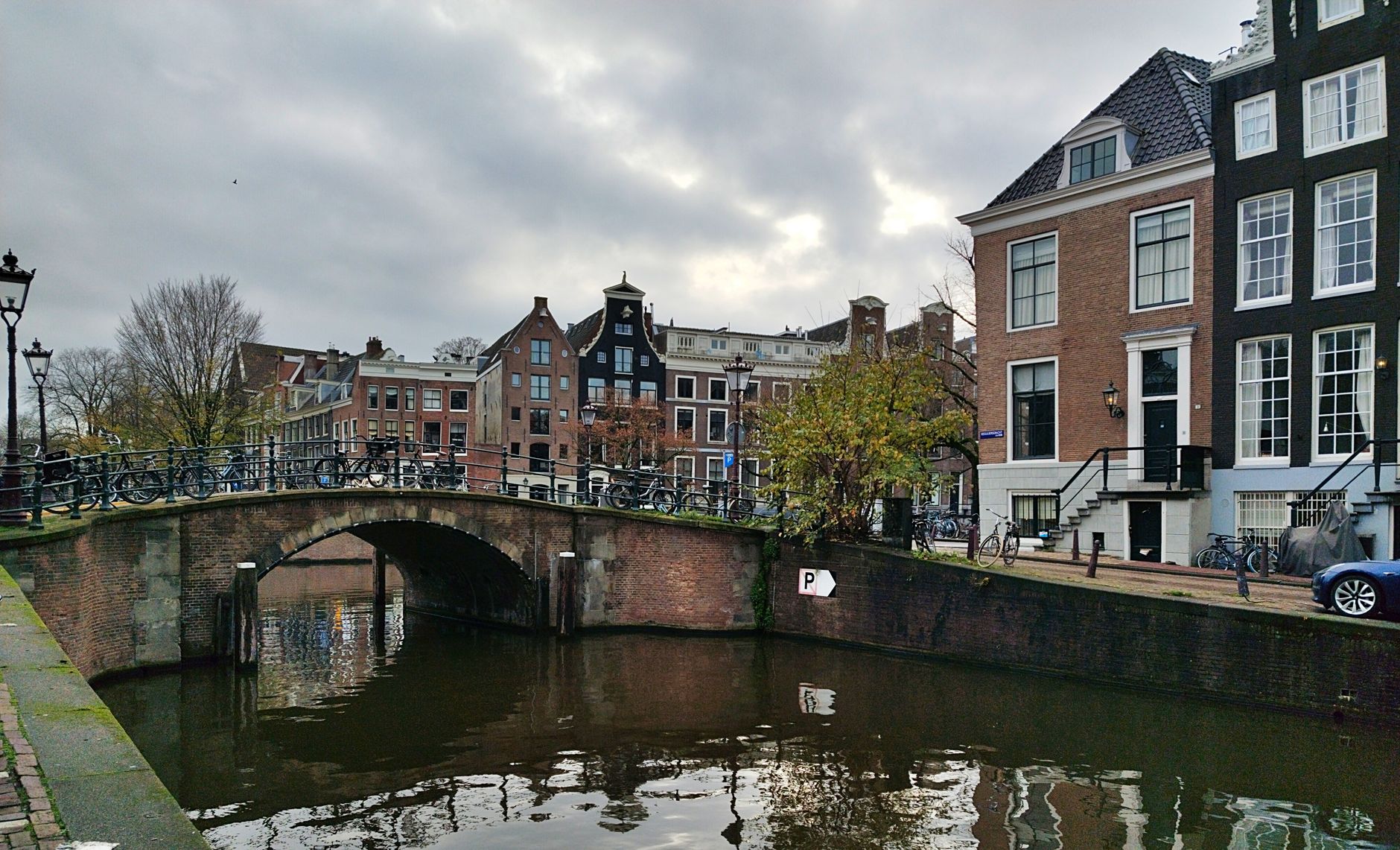
Amsterdam's city council approved an expanded €47 million green-roof subsidy programme on Wednesday, the largest single municipal climate investment in the Dutch capital since the 2019 Climate Agreement. The money will fund insulated rooftop gardens on at least 1,200 social-housing blocks across Noord, Nieuw-West, and Zuidoost by the end of 2027. For a city already watching France record more than 2,000 excess deaths during its latest heatwave, the timing is pointed.
The urgency is real. Europe's summer of 2026 is shaping up as the hottest on record in parts of the continent, and Amsterdam's dense, brick-heavy building stock in areas like the Jordaan and De Pijp absorbs heat badly. The municipal climate office has been tracking so-called urban heat-island differentials since 2021, and last month logged a 6.4-degree Celsius gap between surface temperatures in the Bijlmermeer and the cooler, tree-lined Vondelpark district on a single afternoon. That gap is the widest the office has ever recorded.
Where Amsterdam Stands Against Its Peers
The comparison with other mid-size European cities is instructive. Copenhagen committed in 2021 to becoming carbon neutral by 2025 and largely hit that target on electricity generation, though its heating network still runs partially on biomass the Danish government classes as renewable. Vienna's Wiener Linien public transport system now runs on 100 percent renewable electricity, a benchmark Amsterdam's GVB transit operator has set for itself but will not reach until 2028 at the earliest. Seoul, often overlooked in European climate conversations, restored the Cheonggyecheon stream corridor in the early 2000s and has since recorded measurable reductions in local air particulates, a model Amsterdam's Waterways Department cited in its 2025 Amstel River Enhancement Plan.
On cycling, Amsterdam remains the global reference point. The city's own transport figures put modal share for bicycles at 51 percent of all daily trips within the ring road, a number no other city above one million residents has matched. But the headline figure masks a problem: nitrogen oxide concentrations on the Wibautstraat and parts of the S100 ring road still exceed European Union limits set under the 2023 Clean Air Directive, and the city lost an enforcement case at the Council of State in March over its slow progress on the Schiphol cargo corridor. Barcelona, by contrast, has pushed NO2 readings below EU thresholds on its Superblocks grid two years ahead of schedule.
What the Next 18 Months Look Like
The green-roof programme is not the only lever being pulled. The cruise ship ban, fully enforced from January 2026 after years of political negotiation, has already cut particulate emissions in the Centrum district by an estimated 11 percent compared with the same six-month period in 2024, according to RIVM, the Dutch national public health institute. The IJ waterfront from Centraal Station to NDSM Wharf is measurably cleaner. Residents in the Haarlemmerbuurt, which sits directly under the old cruise approach path, have noticed the difference.
The nitrogen file remains the most politically difficult piece. Farmers' protests, which paralysed parts of the A10 ring road twice in 2025, have not gone away, and the D66-led coalition in Amsterdam is caught between supporting the national nitrogen reduction targets and managing fury from agricultural communities on the city's fringes near Amstelveen and the Haarlemmermeer polder. The council's compromise, backing a voluntary buyout scheme for livestock farms within 25 kilometres of Natura 2000 sites, satisfies neither environmentalists nor farmers fully.
For residents and businesses, the practical upshot is a rolling set of deadlines. Diesel vans will be barred from within the A10 from January 1, 2027. The new heat-action plan, modelled partly on Vienna's Hitzeaktionsplan, obligates all city-owned buildings to install cooling stations open to the public within 400 metres of every residential block in the five outer boroughs by summer 2028. Anyone hoping to tap the green-roof subsidy should register with the Gemeente Amsterdam's Duurzaamheid loket before September 30; the first tranche of 300 slots filled within a week of the January opening, and administrators expect this round to move just as fast.